The pathway

Summary of skills audit, highlighting what skills you need to develop for your future career:

The skills needed for a cybersecurity analyst/ engineer is five main ones, however the list could go on into detail and become more.

Firstly the individual needs to be analytical, and this a key skill. The person must be able to study the computer system, know any potential risk and therefore find the potential solutions.

The next skill is to consider is communication, as the an engineer/ cybersecurity analyst, you must be able to make the user understand the importance of protecting one’s data and how that information is relayed to the user. The user may/ or may not know the terminology used within this profession, so being able to explain it to them simply is a key skill. The skill to hold would be a strong oral and communication skill.

Being creative is a vital skill to have within this IT profession. The analyst/ engineers must be able to anticipate a cyber securirty attack, and should be a step ahead of the threat. The key skill to have is to always be thinking ahead of the next move and not being at a stationary position; always be on the go with your thinking.

Being detailed oriented is another skill to acquire within this profession. Some threats are easy to detect whereas others are not, and to be focused on the detail of the security problem, and noting any changes to be seen within the system is useful and very important.

Human Organ printing

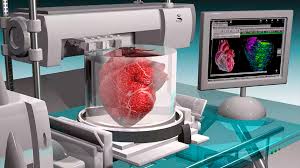
Currently, technology is advancing and one of the latest developments in the medical world is, Bio printing technology. This is translated into organ printing, which is done via 3D printing. 3D printing is the manufacturing method in which builds models, which include: plastic, metal, liquids, and living cells such as this technology is being discussed.

This technology advancement is the possibility of printing human organs, from life cells. This has been in the making from millions being spent on research and a breakthrough has been done. The first to begin researching and seeing if this was a possibility is Charles Hull, when he invented the Stereoscopic method in 1983. This process had begun to solidify the polymer material, which therefore would extrude it from a nozzle, all of this was relied upon a laser; like today. The basic understanding of this, had concluded that, an objects 3D shape can be designed within a computer aided software and then be sent to a printer for printing.

Following the discovery of Charles Hull, a group of Israeli scientists were the first ones to begin printing and had printed a heart using human cells. The heart was formed using ‘bio ink’, which was from human cells.

The point of 3D medical printing, is due to speeding up surgical procedures, also produces cheaper surgical tools. Within the united states, it is predicated that the market value of the 3D printing will reach a staggering 1.2 Billion by 2020.  

This is an emerging technology and has never been seen within the 21st century however, it can save millions of lives, due to the waiting of an organ-donor taking time, and the one thing a patient does not have is, time. Within the locality of Australia, the average time of organ transplant is 6 months to 4 years, and the number of patients is 1,400; however, could differ due to the organ. Due to this device, the number can be shortened and the waiting time can be cut. This is the future of medicine, by helping individuals which life threatening diseases by needing organs, in which lives can be saved.

The printing of the organ is done with the 3D printing and the low cost of the printers and the availability of the device being accessible within the world makes it a huge step, of being an emerging technology. The advancement within this era of technology, this device of printing human organs is achievable and would be an essential product within the medical field. This could therefore enable, sustainable manufactures, which would be affordable products/ components.

All of this is a stepping stone in helping individuals within the world, as it is a convenient way of helping to save lives, instead of waiting. It would boost the health of many sick people, and boost the medical field finically.

References:

All3DP. (2019). 5 Most Promising 3D Printed Organs for Transplant | All3DP. https://all3dp.com/2/5-most-promising-3d-printed-organs-for-transplant/

Healthcare IT Australia. (2019). 3D printing implants and organs is the new reality. https://www.healthcareit.com.au/article/3d-printing-implants-and-organs-new-reality

Healthcare IT Australia. (2019). Breakthrough in the 3D printing of human organs https://www.healthcareit.com.au/article/breakthrough-3d-printing-human-organs

3D Supply Guys. (2019). Why is 3D Printing Important

https://3dsupplyguys.com/blogs/3d-printing-education/why-is-3d-printing-important

PCMAG. (2019). 3D Printing: What You Need to Know.

https://www.pcmag.com/article/289175/3d-printing-what-you-need-to-know

Connections in the industry & Career Timeline

The way in order to achieve my plan of going into the cybersecurity sector is through connections which I will build through my internship and also Linkedin. Linkedin is a great way to meet individuals and they will see your professional profile or you will be able to see and look at the professional community and how they work.

My linkedin profile is at a beginner level, however as time goes on it will continue to progress.

Linkedin: https://www.linkedin.com/in/abdirahman-ali-263054190/

Career Timeline- Cyber-security Analyst/ engineer consultant

I personally want to become a security consultant and open up my own business that help local business up to big companies. In order to do this, I will first have to get my bachelor’s degree in Cybersecurity and then gain some knowledge or internship within some companies.

After gaining some experience from some companies I will furthermore, earn a more mdi-level role asa security analyst/ engineer. Once I gain more experience I will earn a higher- level role as an engineer/ analyst as being a consultant.

Timeline-

Graduate——–> internship——–>cybersecurity graduate job———–>mid-entry level position————-> high- level role position as a cybersecurity analyst/ engineer

The only difference between a mid-level entry and a high level position is the experience, as that is where the role of high level positions lies.

Reference:

(1) SEEK. (2019) https://www.seek.com.au/cyber-security-consultant-jobs

(2) Au.indeed.com. (2019). Cyber Security Jobs in Melbourne VIC (with Salaries) | Indeed.com. https://au.indeed.com/jobs?q=cyber+security&l=Melbourne+VIC

(3) New Horizons Worldwide. (2019). 4 Cybersecurity Career Paths (And the Training to Get You There). https://www.newhorizons.com/article/4-cybersecurity-career-paths-and-the-training-to-get-you-there

(4) Cyberseek.org. (2019). Cybersecurity Career Pathway. https://www.cyberseek.org/pathway.html

(5) Cyber Security Education. (2019). Cyber Security Careers and What You’ll Do on the Job. https://www.cybersecurityeducation.org/careers

Introduction:

Career aspirations and interest:

My name is Abdirahman Ali, and I’m new into Information Technology (IT), I have a background in Science so it will take a while to adjust to this course. My career aspiration is to become a cybersecurity analyst/ engineer, due to the world becoming a technological era, in the 21st century. My interest in joining the course is, due to the job availability and how this really suited me, as I’ve always had a passion for computers/ technology however didn’t put much time in it. Hopefully, after this course and the completion of the bachelors of Cybersecurity, it will be a rewarding career choice.

Summary of skills audit, highlighting what skills you need to develop for your future career:

The skills needed for a cybersecurity analyst/ engineer is five main ones, however the list could go on into detail and become more.

Firstly the individual needs to be analytical, and this a key skill. The person must be able to study the computer system, know any potential risk and therefore find the potential solutions.

The next skill is to consider is communication, as the an engineer/ cybersecurity analyst, you must be able to make the user understand the importance of protecting one’s data and how that information is relayed to the user. The user may/ or may not know the terminology used within this profession, so being able to explain it to them simply is a key skill. The skill to hold would be a strong oral and communication skill.

Being creative is a vital skill to have within this IT profession. The analyst/ engineers must be able to anticipate a cyber securirty attack, and should be a step ahead of the threat. The key skill to have is to always be thinking ahead of the next move and not being at a stationary position; always be on the go with your thinking.

Being detailed oriented is another skill to aquire within this profession. Some threats are easy to detect whereas others are not, and to be focused on the detail of the security problem, and noting any changes to be seen within the system is useful and very important.

Lastly, having knowledge of Information Technology (IT) is critical, as the threats to cybersecurity is always changing. It is vital to always update your knowledge on the security risks that are relevant currently, due to the 21st century, technology is growing rapidly and changing. Examples of such information to know is, the latest data protection news, cybersecurity legislation, and practise techniques. What distinguish a good cybersecurity analyst engineer from the rest of his peers is, the individual is always wanting to seek out information to use it, to shape their problem-solving strategies.

Design a site like this with WordPress.com
Get started